What Makes Rawzu's Satisfying Valorant Clips So Addictive to Watch
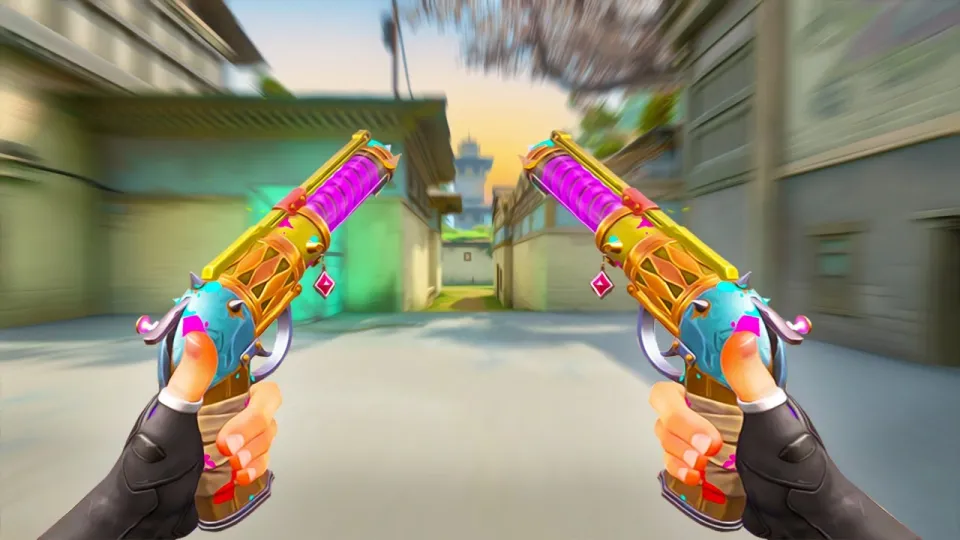
Video: 20 Minutes of Satisfying Valorant Clips
Want articles like this for your own video to promote it on YouTube and Google? Order them through the Telegram bot @sat_sit_bot. Articles with your video embedded are written and posted by the bot itself — on popular topical sites (no ads). Try it free: 50 articles on us.
Rawzu's "20 Minutes of Satisfying Valorant Clips" works because it strips Valorant down to the parts that make the game feel good: clean Phoenix aggression, fast movement, and one-taps that land exactly where the crosshair was placed. The clips run across maps like Lotus and Icebox, and the through-line is a duelist who never stops pushing. If you want to watch the same energy live, Rawzu streams daily at kick.com/rawzu.
Why Phoenix Is the Engine Behind These Valorant Clips
Phoenix is an offensive Valorant agent built to hunt enemies while crippling their ability to shoot back, and that identity shapes almost every clip in the video. His kit gives a duelist four tools that all push forward instead of holding back:
- Blaze creates a wall that blocks vision and deals damage, letting Phoenix cross open, defended areas without walking into a crossfire.
- Curveball throws a flash that blinds enemies even when they are tucked behind corners, which is why so many entries in the video start with a blind and end with a kill.
- Hot Hands throws a damaging fireball that also heals Phoenix when he stands in the flames, turning chip damage into sustain.
- Run it Back is the ultimate that lets Phoenix die, respawn at his starting position with full health, and keep the round alive.
Together, Hot Hands and Run it Back make Phoenix a very durable duelist, and players who like to play aggressively get the most out of the agent. That durability is exactly why the clips can be so relentless: a Phoenix who trades his life for space can simply come back and do it again.
What the Settings and Peripherals Actually Contribute
Rawzu publishes his full setup, and every number in it explains a piece of the movement and aim seen in the video. His sensitivity is 400 DPI with 0.625 in-game, a low effective sensitivity that rewards big arm movements and precise micro-adjustments rather than twitchy wrist flicks. His resolution is 1440x1080, a stretched aspect ratio that widens player models on screen and makes heads easier to track at range. His crosshair is coded 1-6-2-2, a compact, high-visibility reticle that keeps the center of the screen uncluttered during fast peeks.
The hardware list matches the same philosophy: a Lamzu Maya X mouse for a light, stable grip, a Zowie H-SR-SE 2 Blue mousepad for consistent glide, and a Zowie XL2566K 360Hz monitor so every frame of a fast swing is visible. None of this wins rounds on its own, but a 360Hz panel and a stretched resolution make the kind of movement shown in the clips far easier to read and repeat.
Movement, Aim, and the "Satisfying" Factor
What separates a satisfying Valorant clip from a lucky one is repeatability, and the video leans on movement as much as aim. Viewers repeatedly note that the movement speed is hard to keep up with and that the aim looks unreal in the same breath, which is the actual point: strafing between shots, clearing angles in a set order, and re-peeking only after a blind lands. The clips also show a gunplay philosophy that treats the Vandal as a one-tap tool rather than a spray weapon, which is why individual kills read as clean rather than chaotic.
Three habits show up again and again across the footage:
- Abilities first, bullets second. Curveball or Blaze creates the opening, and the Vandal finishes it.
- Crosshair placement before the peek. The reticle is already at head level when the enemy appears, so the shot is a confirmation rather than a correction.
- Economy awareness. Clips show early rounds where a Vandal, full abilities, and full shields come together, which means the buy was planned rather than improvised.
Reading the Chat: What Viewers Notice Most
The comment section under the video is a useful map of what actually lands with an audience. The single most-liked comment calls the full 20 minutes the best time spent, which tells you the pacing holds up over a long runtime instead of peaking in the first two minutes. Another highly liked comment singles out a moment of commentary as the best in the video, and a separate one praises a teammate's line delivered mid-round, so personality is part of the appeal, not just frags.
Several comments focus on specific plays: a one-tap on a Clove that viewers call the most satisfying thing they have seen in Valorant, a round where a teammate jokingly accuses Rawzu of stealing an ace, and a Sage moment that gets dismantled immediately after. Others highlight the supportive tone of the teammates, which softens the aggression of the gameplay and makes the clips feel like a squad session rather than a solo highlight reel. A recurring joke in the comments is that the commenter's own lobbies feature enemies who shoot back and use game sense, a reminder that highlight reels are curated by definition.
How to Actually Use Clips Like These to Improve
Watching satisfying Valorant clips passively does very little; watching them with a specific question in mind does a lot. The practical approach is to pick one habit per session and copy it deliberately.
- Choose a single entry pattern, such as Curveball into a wide swing, and run it in deathmatch until the blind and the peek feel like one motion.
- Copy the crosshair placement, not the crosshair code. The 1-6-2-2 reticle is a preference; keeping the reticle at head height while clearing angles is the transferable skill.
- Test the stretched resolution in a custom game before committing. A 1440x1080 setup changes how models look and moves your sensitivity feel, so give it more than one match.
- Review your own clips the same way. Record a round, then check whether your abilities created the opening or whether you peeked into a ready enemy.
The same logic applies to the agent choice. Phoenix rewards players who want to take space and can accept trading their life for a round, because Run it Back makes that trade cheap. If you prefer holding angles, the same clips will look impressive but translate poorly to your own games.
Useful Links
- Live streams: https://kick.com/rawzu
- Original music on Spotify: https://open.spotify.com/artist/6DbATPR1PTNMx7U918bg1Q
- Discord community: https://discord.gg/axnFwyvxp3
Final Thoughts on Rawzu's Satisfying Valorant Clips
Rawzu's 20-minute compilation is satisfying because it is consistent rather than lucky: the same agent, the same entry habits, and the same low-sensitivity, stretched-resolution setup produce the same kind of clean kill over and over. Phoenix's kit does a lot of the heavy lifting by letting an aggressive duelist survive mistakes, but the clips only work because the fundamentals underneath are disciplined. The comment section confirms the formula, praising the pacing, the commentary, and the supportive teammates as much as the aim. For more of the same, follow the channel Rawzu and catch the daily streams at kick.com/rawzu, where the highlights come from.
Key takeaways
- Rawzu's 20-minute satisfying clip video runs on Phoenix, Valorant's aggressive duelist with Blaze, Curveball, Hot Hands, and Run it Back.
- His listed setup: 400 DPI, 0.625 in-game sensitivity, 1440x1080 resolution, crosshair 1-6-2-2.
- Hardware: Lamzu Maya X mouse, Zowie H-SR-SE 2 Blue mousepad, Zowie XL2566K 360Hz monitor.
- Maps featured across the clips include Lotus and Icebox.
- The video's most-liked comment praises the 20-minute runtime as time well spent, and teammates' supportive reactions recur throughout.
Questions & answers
What sensitivity and DPI does Rawzu use in Valorant?
Rawzu lists 400 DPI with 0.625 in-game sensitivity, which is a low effective sensitivity built for arm aiming and precise micro-adjustments. He pairs it with a 1440x1080 stretched resolution, crosshair code 1-6-2-2, a Lamzu Maya X mouse, and a Zowie XL2566K 360Hz monitor. Copying the numbers exactly is less important than matching the feel of your own mousepad and grip.
Why is Phoenix such a good agent for aggressive highlight clips?
Phoenix is an offensive duelist whose kit is designed to push into enemies rather than hold them off. Blaze blocks vision and deals damage, Curveball blinds enemies even behind corners, Hot Hands damages and heals, and Run it Back lets him respawn after dying. That combination makes him durable enough to take risky fights and still keep the round alive.
Do clips like these actually help you improve at Valorant?
They help if you watch with a specific habit in mind instead of just enjoying the frags. Pick one pattern, such as flashing before a wide swing or keeping your crosshair at head level, and practice it deliberately in deathmatch. Passive viewing builds no muscle memory, but targeted imitation of a single skill does.
Is a stretched resolution like 1440x1080 worth using?
A stretched resolution widens player models on screen, which many players find makes heads easier to track at range. The trade-off is that it changes how the game looks and can shift how your sensitivity feels, so test it in a custom game before using it in ranked. It is a preference, not a requirement for good aim.
Source: 20 Minutes of Satisfying Valorant Clips · Markdown version